Bicep Heart Trend: The Pose and Video Explained
Last updated:
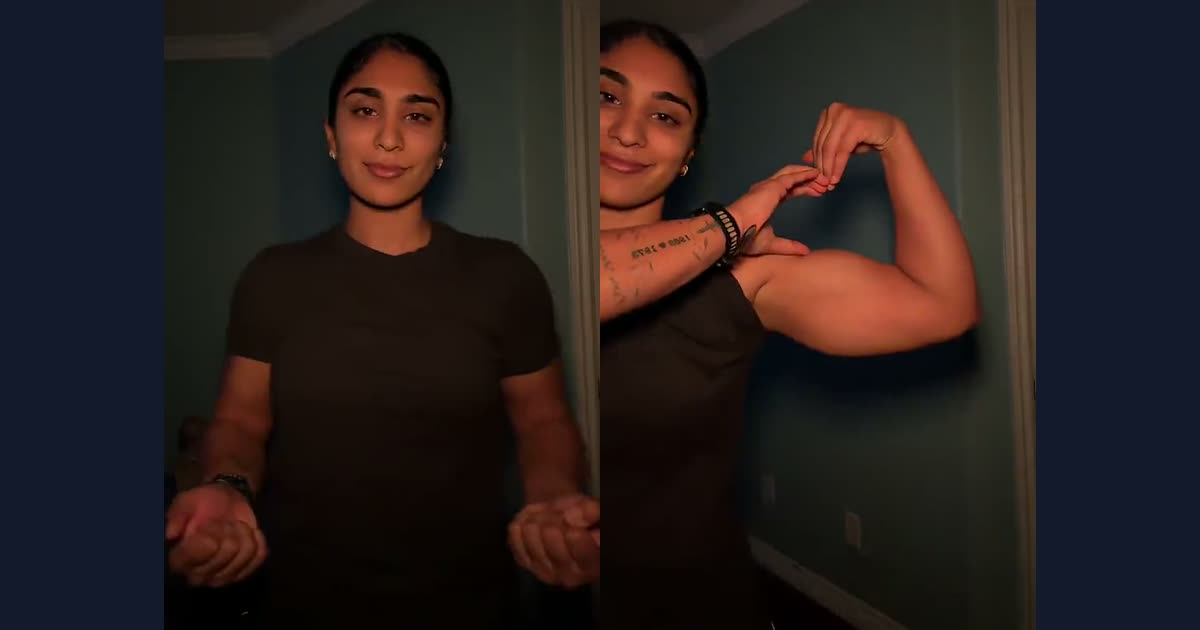
The Bicep Heart Trend turns a muscle flex into a heart. Lift one arm, bend it at the elbow and curve the other hand beside the bicep until the two outlines meet. The reveal works as a flirty greeting, a gym joke or a quick message to a friend. You can try the pose on camera or use a photo to make MemeRadar’s seven-second version. Here are the movement, its recognizable examples and the details that make the heart read clearly.
What is the Bicep Heart Trend?
The Bicep Heart Trend is a short pose built from a flexed upper arm and a curved free hand. The fingers complete the heart beside the bicep, giving a regular gym flex an affectionate finish. A close vertical frame keeps the face and arm visible together, and a small pause lets the viewer recognize the outline. [3]
A finger heart uses the fingertips to make a tiny symbol. A two-hand heart joins both hands in front of the body. This version uses the arm itself as half of a much larger shape. Look at the gap beside the bicep as the free hand moves into place: closing that gap is the reveal.
Bicep Heart Trend examples to recognize
TikTok and Instagram versions turn the same pose into different messages. A fitness clip can begin as a serious flex, then soften into a heart. A couple can point the finished gesture at each other. A tutorial can slow down the hand movement so viewers see where the fingers belong. The final outline remains recognizable as the outfit, expression and setting change.
The linked @kavithageorge example shows the arm lift and the finished heart. Watch the arm lift and hand placement rather than trying to match every detail of the background or sound. The useful reference is the sequence: raise the arm, flex, bring the other hand across and hold the shape. That is enough to join the format with your own expression. [1]
What makes the Bicep Heart Trend fun to share?
The pose puts a confident flex and an affectionate message in the same frame. Viewers see the muscle first, then the hand changes the meaning. The small transformation gives a short video a beginning and a payoff without needing a spoken explanation.
It also leaves room for different personalities. A fitness account can emphasize the arm, a couple can make it a greeting, and a casual creator can use an exaggerated expression. A clear silhouette carries the idea across languages. Music and captions can add to the mood while the pose itself remains readable with the sound off.
For a simple version, keep the camera still and leave the last beat for the finished heart. For a playful version, begin with an unexpectedly serious face or address the gesture to someone in the caption. Both use the same lift-and-reveal structure, making the variation easy for viewers to understand.
Follow the pose in the seven-second reference
The seven-second reference opens with the person facing the camera and both hands low. The first movement brings one arm up and bends it into a flex. The other hand crosses toward the bicep, then curls so the fingers and arm curve close the heart. The final beats hold the shape and turn the completed gesture into the payoff.
The framing matters as much as the movement. A vertical crop keeps the face and arm in one readable column; a darker background separates the skin outline from the room; and the hold at the end gives viewers time to recognize the heart. When you study a version, look for those three elements before comparing music, captions or clothing.
What can you make with the MemeRadar template?
MemeRadar’s Bicep Heart Trend generator turns one portrait into a seven-second, 9:16 vertical clip for 7 credits. Watch the reference, upload a photo and check the preview before submitting. The single duration follows the full motion: lift, flex, close the heart and hold.
Choose a clear upper-body photo with the face, shoulder and arm visible. Leave room beside the body for the gesture and use an image you own or have permission to edit. Sign in and buy a credit pack to generate; new accounts start with zero credits. You can follow the task in My videos and download the completed MP4 there.
After generation, watch the free hand as it meets the bicep and check that the final heart remains clear. A caption works best above or below the gesture. Failed tasks return their credits, and you can delete unwanted results from your account.
Google Trends for the Bicep Heart Trend
The chart tracks searches for “bicep heart trend” in the displayed location and date range. Its relative scale runs from 0 to 100; 100 marks the highest interest within that selection. Use the dates along the chart to follow rises and dips, and check when the snapshot was updated before treating it as current.
A zero can mean there is too little activity to report. Search interest is different from a video’s views or likes: one tells you what people look for on Google, while the other describes an individual post. Keep the same location and date range when comparing charts so the scale has a consistent meaning.
Frequently asked questions
Is the Bicep Heart Trend the same as a finger heart?
No. A finger heart uses pinched fingers. The Bicep Heart Trend combines a flexed arm with a curved free hand to close a larger heart shape against the upper arm.
Do I need large muscles to try it?
The recognizable movement comes from the arm angle and the hand position. Different bodies create different outlines, which is part of the participatory format.
How long is the MemeRadar version?
Choose the seven-second option for seven credits. It includes the arm lift, the curved hand and the final heart hold.
Google Trends
Loading trend data…